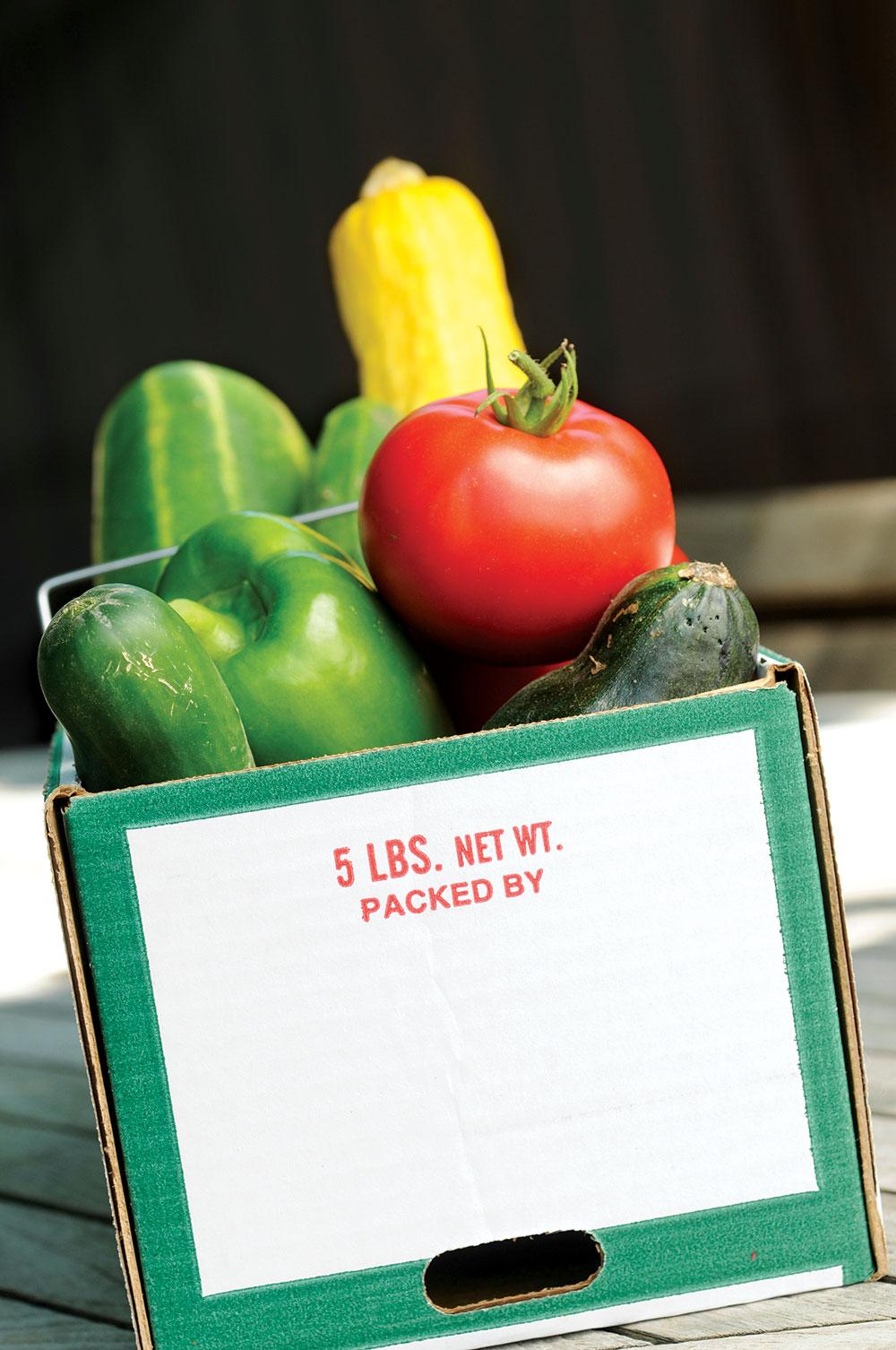
You probably haven’t given it a second thought as you’ve been planting, or at least planning, that row of tomatoes in your vegetable garden. But can you properly call it a vegetable patch once those plants are in?
Botanists usually tell us what family a plant falls in, but when it comes to the Solanum lycopersicum, the U.S. Supreme Court has had its say. The case, Nix v. Hedden (149 U.S. 304), was decided in 1893. The legal question before the court was: Is a tomato a vegetable or a fruit? As usual, the real question was about money.
The suit was filed by the Nix family, who ran a big produce company in New York. They claimed that Edward L. Hedden, who was tax collector at the Port of New York, had overcharged them when the Nixes brought tomatoes from the West Indies. Hedden collected duties under a part of the law providing that vegetables could be taxed. The Nixes said tomatoes should have been classified under another section that allowed fruit to come into the country duty-free.
When the case first went to trial, lawyers for the Nixes read dictionary definitions of “fruit” and “vegetable” into the record. Those definitions defined “fruit” as the part of a plant which contains the seeds. Vegetables, according to those definitions, included plants like cabbage, celery, and lettuce, that might ultimately produce seed, but in which the edible parts did not contain the seeds themselves.
The other side said those definitions might be right in a strict botanical sense, but that the proper legal standard was not how they were grown, but how they were eaten. Defense attorneys argued that “in the common language of the people” tomatoes and some other plants such as bell peppers, cucumbers, eggplants, and squash, were thought of and referred to as vegetables.
“All of these are vegetables which are grown in kitchen gardens,” the defense argued, “and which, whether eaten cooked or raw, are like potatoes, carrots, parsnips, turnips, beets, cauliflower, cabbage, celery, and lettuce, usually served at dinner in, with, or after the soup, fish, or meats which constitute the principal part of the repasts, and not like fruits” which were “generally” served as desserts.
“The attempt to class tomatoes as fruit,” Hedden’s lawyers argued further, “is not unlike … [an] attempt to classify beans as seeds.” They noted that in an earlier case, Robertson v. Solomon (130 U.S. 412), the court ruled that there was no reason to classify beans as seeds “any more than walnuts should be so classified.” The court held that beans, “as an article of food on our tables, whether baked or boiled, or forming the basis of soup” are “used as a vegetable.”
The defense said that what had been applied to beans should also be applied to tomatoes, and the Supreme Court bought that argument. The justices unanimously agreed that, botanically, a tomato is a fruit, but that it could be classified as a vegetable under the customs regulations because of the way it was commonly used and described.
Justice Horace Gray wrote, “The passages cited from the dictionaries define the word ‘fruit’ as the seed of plants, or that part of plants which contains the seed, and especially the juicy, pulpy products of certain plants, covering and containing the seed. These definitions have no tendency to show that tomatoes are ‘fruit,’ as distinguished from ‘vegetables,’ in common speech, or within the meaning of the tariff act.”
So, if you listen to the botanists, your tomatoes are fruits; if you listen to the judges, they’re vegetables.
But whichever way you lean, remember that the name “tomato” comes from the Spanish version of the Aztec word “tomatl,” which means “a fat thing.”
Which I hope all of yours turn out to be.
A collection of Jim Bradshaw’s columns, Cajuns and Other Characters, is now available from Pelican Publishing. You can contact him at jimbradshaw4321@gmail.com or P.O. Box 1121, Washington LA 70589.