
By Tony Marks
Ville Platte Gazette
Music has always been a fabric woven into the patchwork that makes up Evangeline Parish. The parish has produced legendary vocalists and musicians in the genres of Cajun, Swamp Pop, Zydeco, and Country. Plans are in the works at the University of Louisiana at Lafayette to make one these musicians a posthumous dean of the School of Music.
Amédé Ardoin was born in the southern part of Evangeline Parish near Basile in 1898 when Jim Crowe laws dominated the political landscape of the American South. However, he was able to cross color lines to play Creole French music on his accordion.
The UL Board of Supervisors received documents on Ardoin that said, he “was credited by Louisiana music scholars with laying the groundwork for Creole music in the early 20th century and wrote several songs now regarded as Zydeco standards.”
Mark DeWitt, an ethnomusicologist at UL Lafayette, said the potential move to name Ardoin a dean was a continuation in an effort to “symbolically retrieve his spirit from his burial site in an unmarked grave in Pineville and return it to his native Acadiana region,” according to reports.
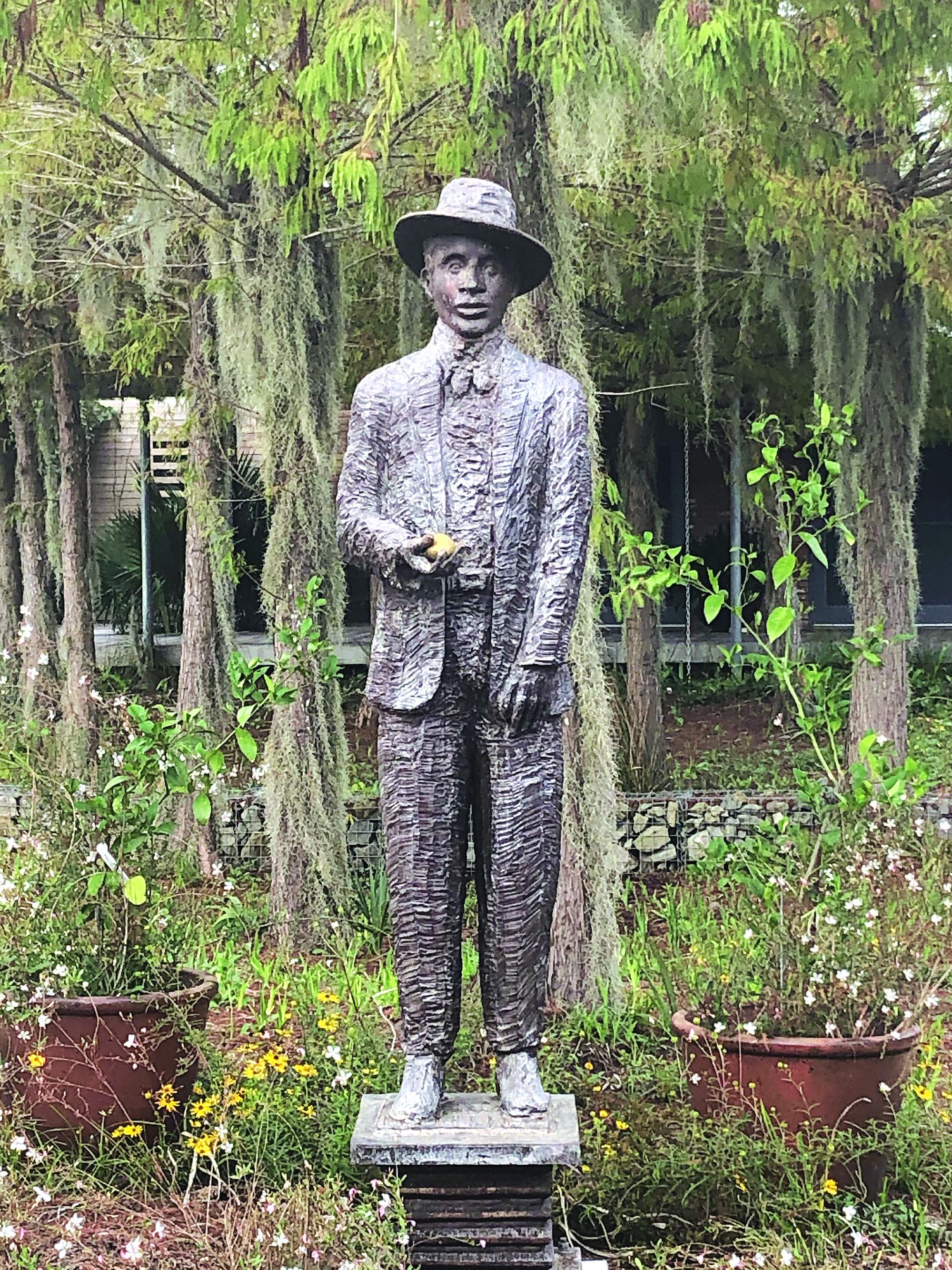
The latest effort came last year when the St. Landry Parish Visitor Center unveiled a statue of Ardoin. A sign near the statue reads, “Amédé passed here on his way home.”
Also near the statue is a plaque with lyrics from one of his songs “Les Blues de Voyage.”
“In the beginning, we didn’t know what that public commemorative would be, but that was the general idea,” former Louisiana Poet Laureate Darrell Bourque said.
Bourque, along with educator Patricia Cravins put into motion ways to honor what they called the root of Creole and Cajun music.
Breaux continued, “Then very soon after we worked on the project, we started calling it the ‘Bringing Amédé Home’ project, which was to symbolically return Amédé closer to his birthplace around St. Landry Parish.”
Ardoin was one of the earliest musicians to record his la la style of Creole music in the 20s and 30s and is widely regarded as the bedrock of today’s Cajun and Creole music. A racial assault following a performance resulted in a brain stem injury and is generally thought to be the cause of his death. Inspired by the Ardoin family’s efforts to “bring him home” from his burial place in an unmarked grave at the Central Louisiana Hospital in Pineville, the Amédé Ardoin Project Committee formed with the purpose of symbolically bringing him home through this public memorial.
Bourque, states, “Ardoin is one of our great existential poets. He knew his first responsibility as artist and as human being was to be true to his voice, and because of his steadfastness to clarity, purity and integrity of voice, he became what his beloved fiddle partner Dennis McGee called him, ‘une chanson vivant’, a living song.”
Dean of accordionists
Evangeline Parish native, Amédé Ardoin, may be recognized as college dean