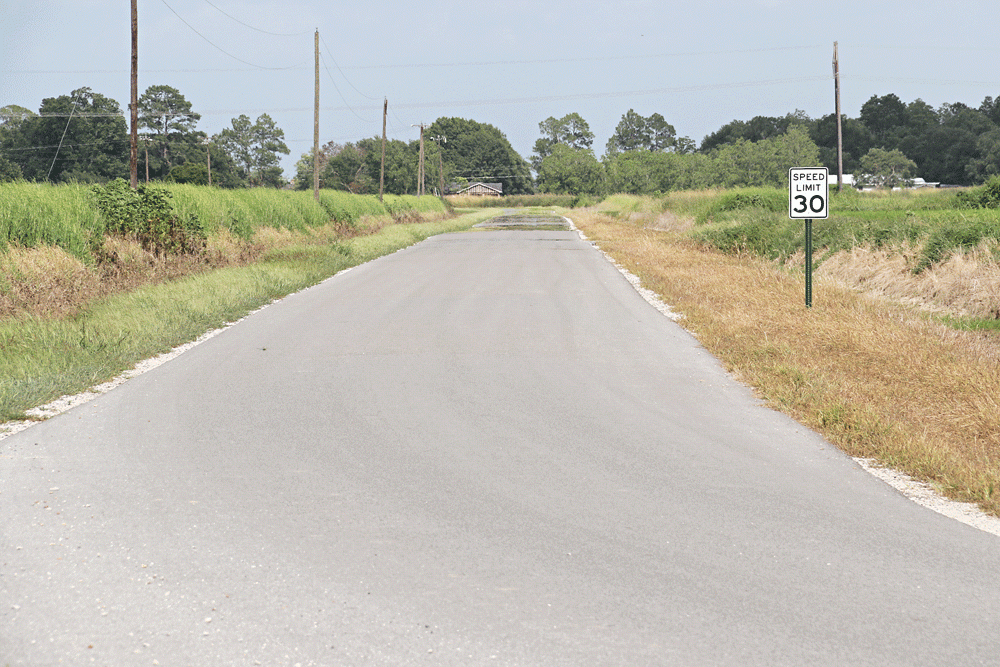
There’s a 30 mph speed limit sign on Soileau Road north of Eunice that’s probably needed now, but about four years ago traveling that fast might have resulted in a trip to the tire shop.
The road now offers an easy smooth ride.
St. Landry Parish President Bill Fontenot
Soileau Road is one 330 miles of roads paved in the Smooth Ride Home program.
Another 15 to 10 miles are planned this year, Parish President Bill Fontenot said at Wednesday’s Parish Council meeting.
Despite the wealth of new roads funded by a 2-cent sales tax in unincorporated St. Landry Parish, questions about road conditions persist at Parish Council meetings.
This past Thursday was no different with Parish Council Chairman Jerry Red asking about “so many roads with cracks” and guarantees on the road work.
Fontenot replied, “A cracked road doesn’t necessarily mean failure.”
Councilman Timmy Lejeune said, “I understand we are supposed to have a year warranty on these roads.”
The parish president also denied ever stating that contractors were required to provide a warranty on the road work.
Lejeuene said, “I understand sealing of these cracks are costing us money. Who is responsible?”
The roads are built to specifications in a contract, Fontenot said.
“Engineers inspect during and after ... and at the time of acceptance. And the public works staff traveling roads. They inspect,” Fontneot said.
“If we see abnormal cracking then we take action under the law if it is determined bad material was used,” he said.
Garrett Duplechain, parish legal counsel, also cited the inspection process as the method used to obtain the quality of work specified in contracts.
Parish engineer Aucoin and Associates oversees the process from beginning to its end, he said.
The warranty issue came up years ago with state road work, Fontenot, a former state Department of Transportation and Development engineer, said.
The guarantee is in requiring the contractor to build a road to specifications, he said. When the road is accepted, “then it is yours.”
There are bonds involved, but they require legal action, he said.
Despite repeatedly telling the Council, “cracks do not mean failure,” Fontenot is to bring information to the Council on the cost of requiring contractors provide a warranty on road paving work.
In another road issue that has come up repeatedly, the Council rejected authorizing its public works director to re-evaluate Parish Road 6-106 and report back to the Council.
Lejeune, who represents the district where the road is located, asked, ““How much longer are we going to mess with Road 6-106?”
The parish has been asked to abandon the road, but one resident objected.
“If one person says, it kills the whole project,” Lejeune said.
At the June 5 Administrative-Finance Committee meeting, Nancy Nell Johnson-Moreau said the road leads to her property and she objected to the parish abandoning the road. A neighbor began putting up a fence on the road right-of-way, she said.
Lejeune, noting that if one landowner with property on a road objects to its abandonment, the road remains public.
“I don’t know why we keep kicking the can down the road,” Lejeune said. “I make a motion tonight that this road be left open ... It needs to stop.”
Later in the meeting, Councilman Harold Taylor asked that a request to abandon Raymond Ryder Road be rejected because the family objected.
An issue with private roads that are impassable raised by Council member Wayne Ardoin is being sent back to committee.
Ardoin asked that the Council’s legal counsel look at the Home Rule Charter in reference to private roads that are inaccessible to emergency vehicles. Ardoin said the impassable roads present a hazard to health.
But, Lejeune asked, “Are we going to fix all of those health hazards and we can’t fix the roads we already have?”
Lejeune added, “I’ve got roads in my district that have potholes the size of where Mr. Red sits at.”
Ardoin agreed with Lejeune, but urged the Council to look at the issue from a public safety view.