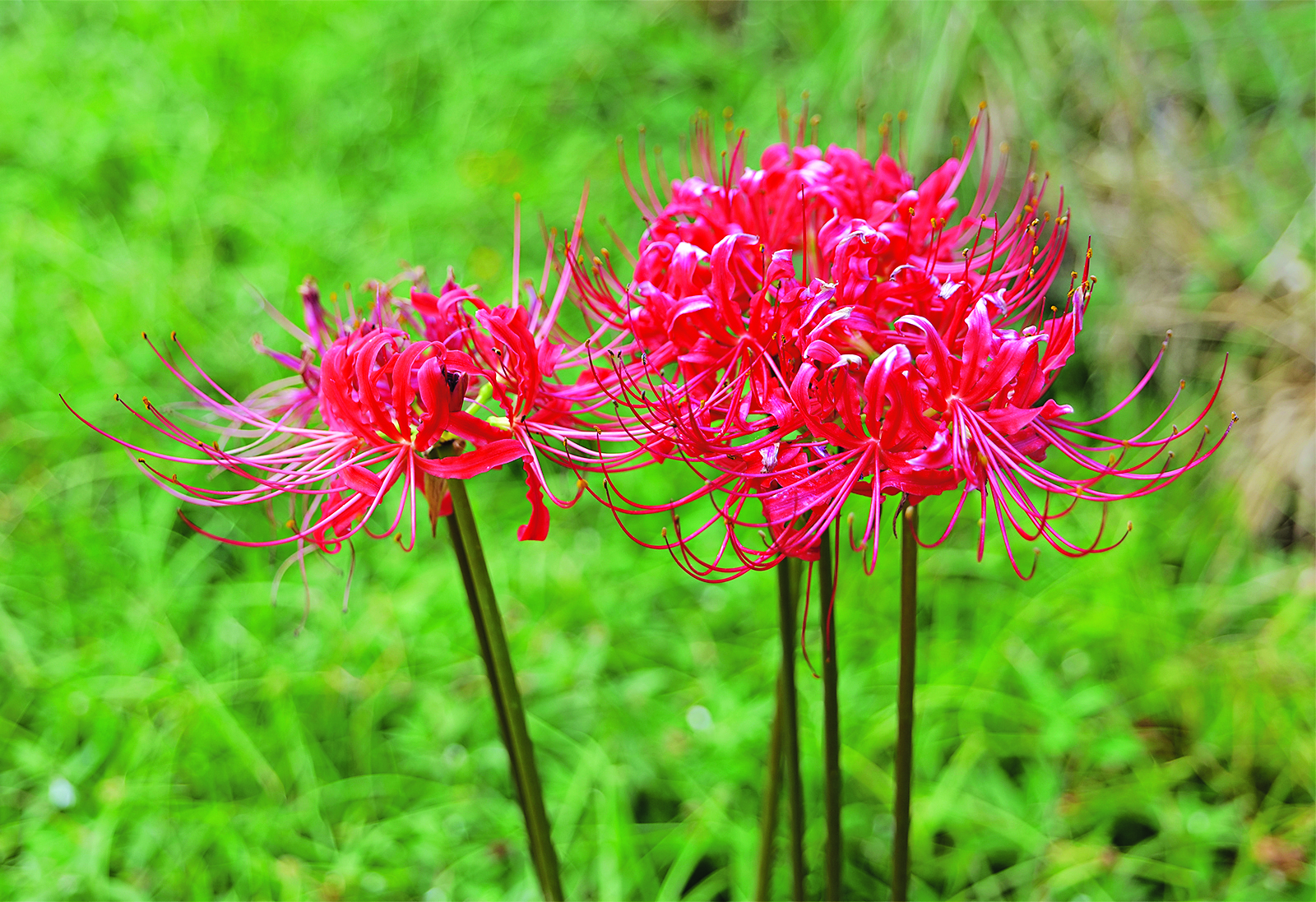
Have you noticed some red flowers popping up, seemingly out of nowhere, lately? Chances are you have been graced by the presence of hurricane lilies.
These flowers tend to show up in August and September — peak hurricane season in Louisiana, hence their name. Long stems give rise to large, showy blooms that usually are red but sometimes display shades of white, pink and yellow. You’ll often find them on old Southern homesites, and they’re a popular passalong plant.
When people say “hurricane lilies,” they’re using an overarching term that includes several different plants. Some interchangeably use the terms spider lilies and surprise lilies. While these plants are similar, they are in fact unique species in the Lycoris genus, which is part of the Amaryllidaceae family. That means hurricane lilies are relatives of the familiar red amaryllis, another beloved Southern garden plant.
Here are some of the most common hurricane lilies you might come across in late summer to early fall:
Red spider lily (Lycoris radiata). This is the classic hurricane lily. It produces orange-red flowers on 12-to-18-inch-tall, leafless stalks. Flowers feature narrow petals and long stamens, creating a spider-like appearance. Foliage growth takes off in the fall and continues through winter before dying back in the spring. This plant performs best in partial shade. Too much shade can hamper blooming, and direct sunlight is just too intense.
White spider lily (Lycoris albiflora). Similar to the red spider lily in appearance and growth pattern, this species sports white flowers that sometimes exhibit a tinge of pastel yellow or pink.
Golden spider lily (Lycoris aurea). With yellow flowers on stems that can reach up to 24 inches tall, this lily makes a statement. Flower petals are accented by attractive wavy margins. Leaves grow in the fall and take on a blue hue.
Naked ladies or surprise lily (Lycoris squamigera). This species produces purple-to-pink flowers reminiscent of trumpets. Blooms form on bare stalks about 18 inches tall. Strappy leaves form in spring and disappear in summer.