
By Rebecca Chaisson
Special to the Eunice News
George Cain was only 17 when he joined the National Guard, hoping to follow in the footsteps of his father and uncles, who all served in the military.
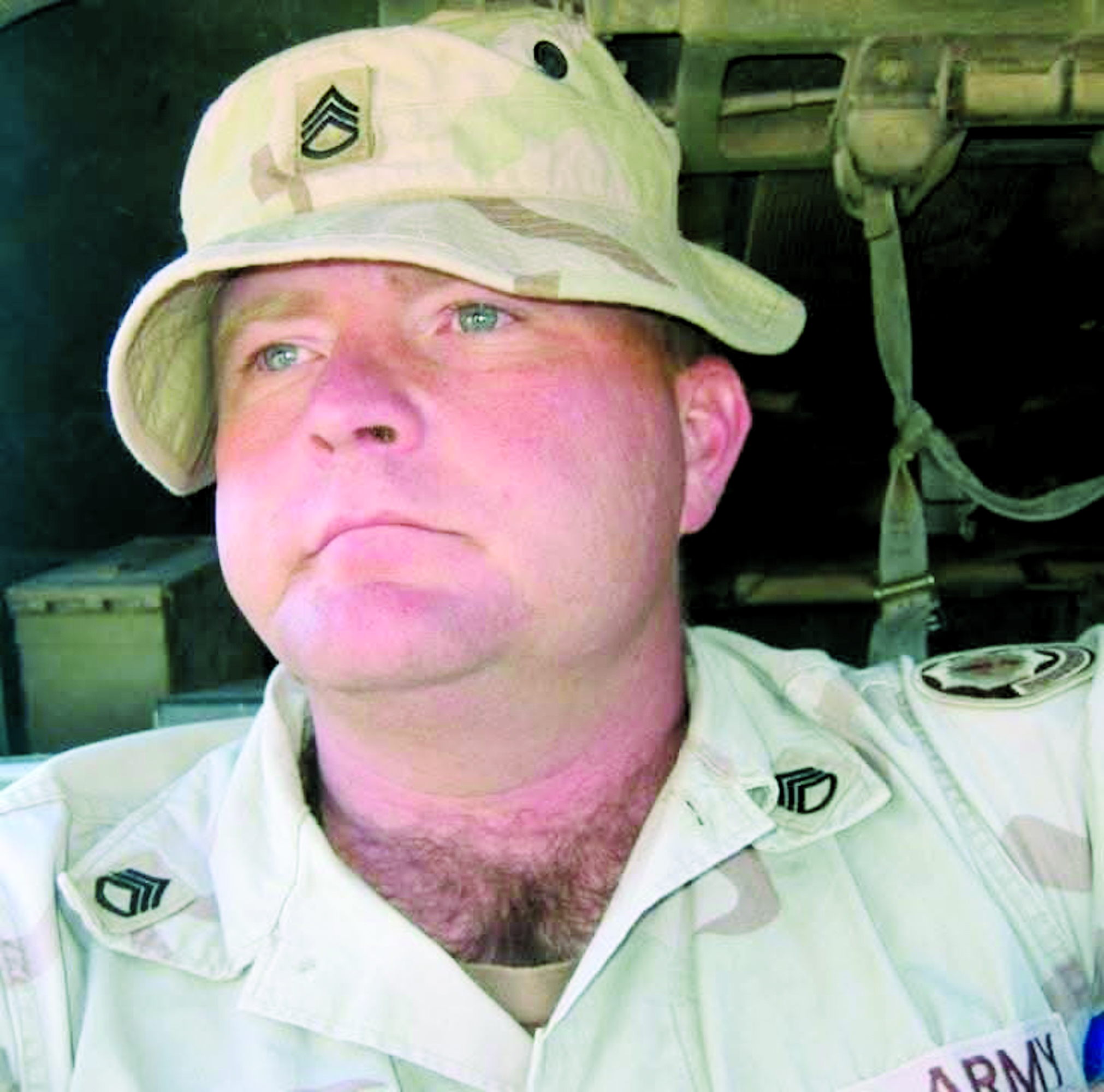
For the next two decades, Cain was deployed to Desert Shield in 1990; Desert Storm the following year; Bosnia in 1996 for a peacekeeping operation; Baghdad for Operation Iraqi Freedom in the early 2000s; and Afghanistan as part of Operation Enduring Freedom in 2008.
On April 30, 2010, after 20 years of proudly serving his country, Sergeant First Class Cain finally retired from the military, finding a different way to serve here at home.
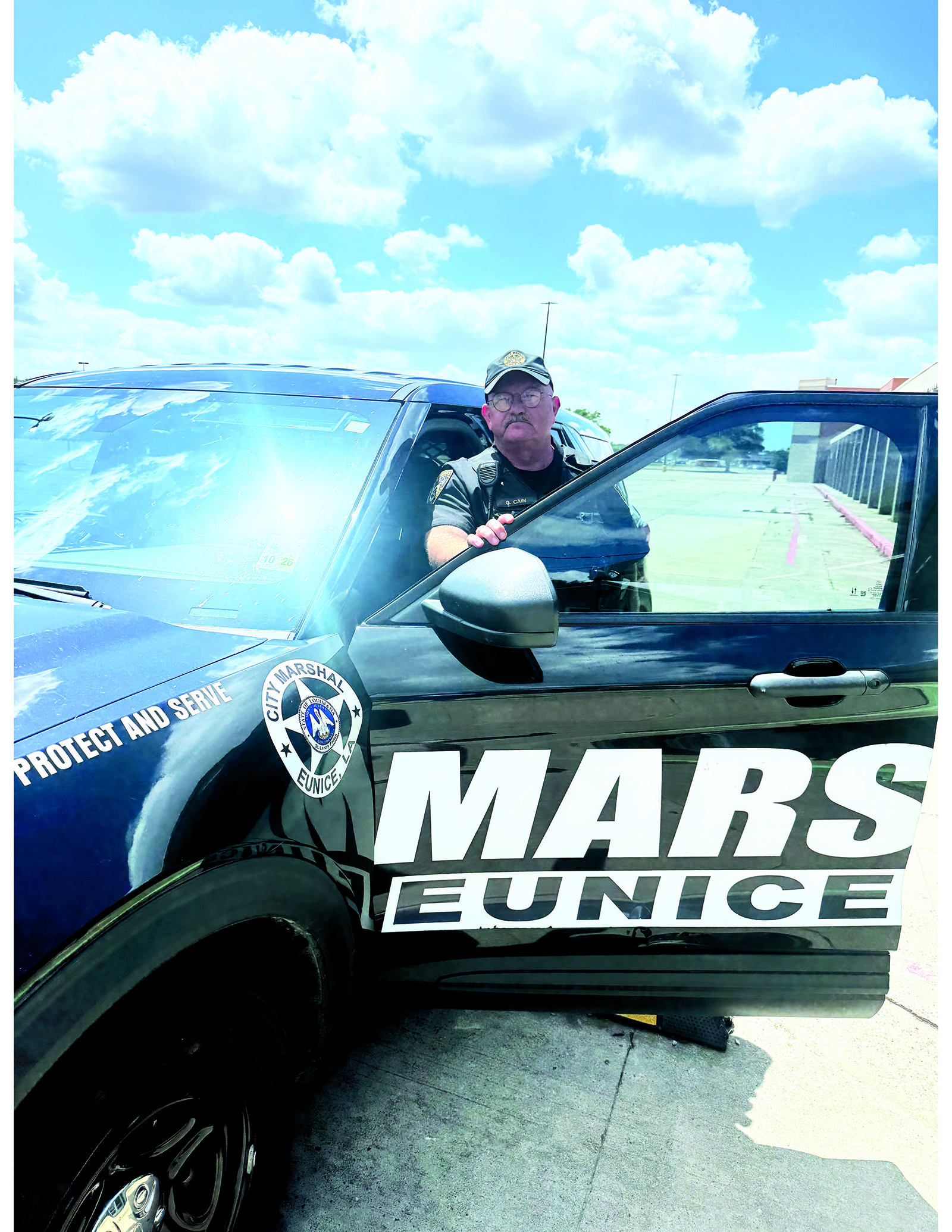
The 56-year-old Mamou resident now serves as a deputy at the Eunice Marshal’s Office, where he has continued to serve his country for the last four years. Cain was employed by the Eunice Police Department for eight years prior to his current role.
Today, Cain reflects on his military career and remembers the one decision that led to his greatest loss – a decision the military trained him to not only make but also overcome.
“I was young and wanted an adventure,” Cain said when asked why he joined the army back in October of 1988, aside from wanting to carry on the family tradition.
Cain spent his first deployment in the Persian Gulf region, helping to defend the area against enemy aircraft as part of the artillery branch. Cain said he carried Stinger missiles on his shoulders but never had the opportunity to shoot at hostile aircraft. Although the enemy may have dodged a bullet in Desert Shield, Cain volunteered for a tougher task when he reclassified as a reconnaissance specialist.
“I got my adventure,” he said. “I enjoyed what I was doing because we were tasked in support of the infantry. We would primarily go in front of the ground forces and try to locate the enemy and give the higher chain of command information about their location so we could develop our plans to engage.”
Despite the more dangerous missions, Cain still never fired a shot at the enemy or felt the loss of a comrade.
When Cain was deployed again to Bosnia, the peacekeeping mission mostly involved presence, patrol and peace.
“It was interesting to me to see how the people lived and socialized,” Cain said, “But the people there really paid no mind to us. They greeted us, and, you know, gave us coffee and food. But it wasn’t really a dangerous experience.”
It’s not that Cain was looking for trouble, but sometimes, trouble looks for young men. It finally found him in Iraq during a fight for another country’s freedom.
“My primary job there, I was a senior scout because I had the most experience at the time,” Cain said. “We escorted convoys, but the focus eventually changed to insurgents.”
It was then that Cain was forced to fire his weapon for the first time, when his group of 25 men in Humvees found themselves in the middle of an ambush.
“It was a small number of men that ambushed us, maybe four or five, because they used small numbers to easily return back into the population,” Cain explained. “They came at us primarily with machine gun fire and light arms. Thankfully, we didn’t suffer any casualties.”
For the first time, Cain found himself exchanging gunfire with people who were trying to kill him. It would ultimately be the first of many times, though.
“We had to engage with the enemy on probably 12 different exchanges,” he said. While he didn’t lose any of his own men, he did lose a friend outside of his platoon, marking his first real experience of loss in combat.
But the brain doesn’t always differentiate between the loss of your own and the loss of the enemy, Cain said.
“Seeing what a bullet can do to someone’s head,” Cain explained, “that’s something that sticks with you. It doesn’t matter that he was the enemy.”
At some point, adventure felt more like survival - “kill or be killed” until it’s time to board the plane home. Cain suddenly had a reason to make it home though. His Hope was there.
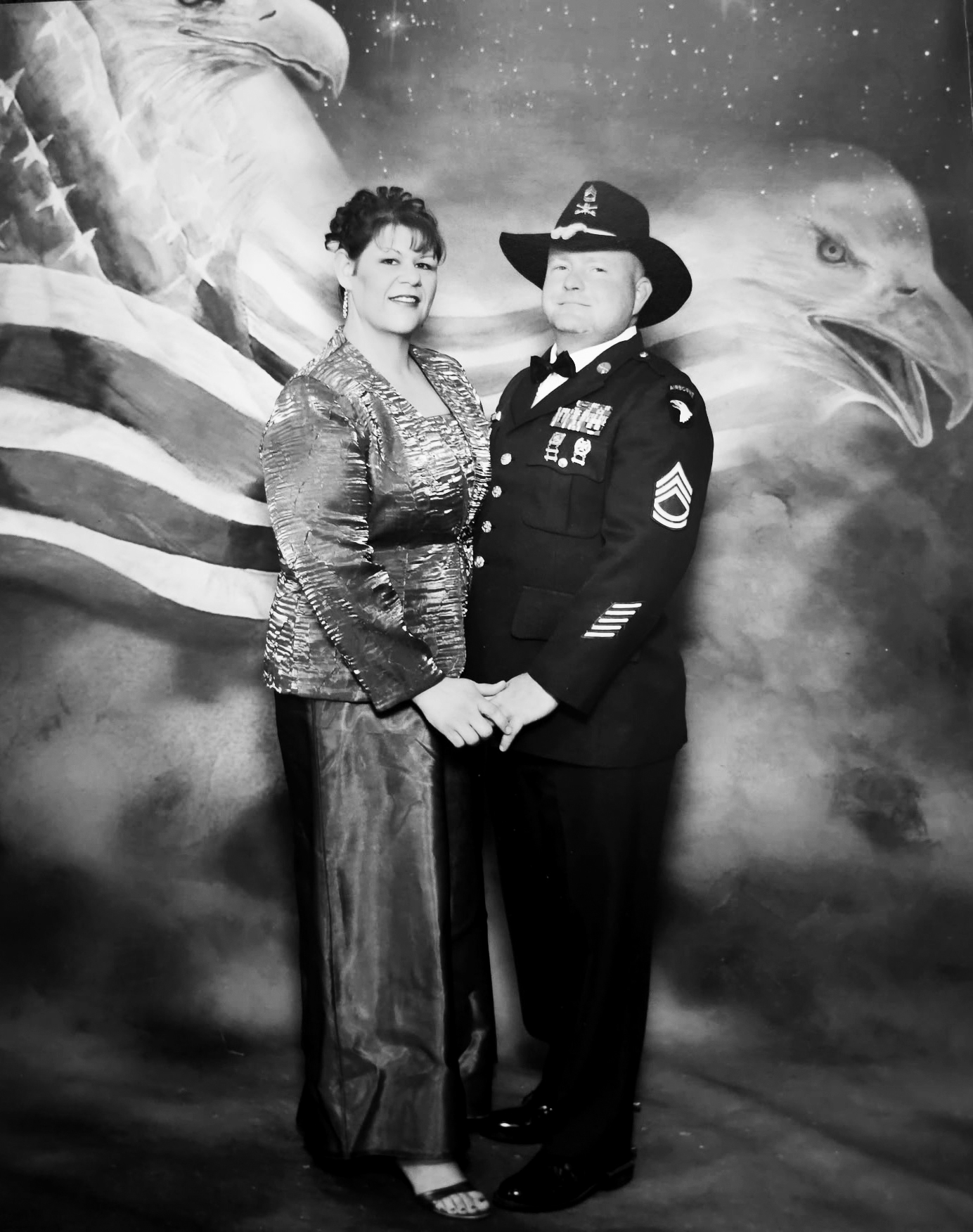
In 2000, while stationed at Fort Polk in between deployments, Cain met a woman from Mamou who stole his heart, “and we started writing our history together”.
The military man married Hope, “a free spirit, full of life” during a brief leave from Iraq. The couple eventually had two children together, Carli, born in 2002, and William, born in 2006. After his return from Iraq, Cain gave up the front lines to spend two years in a military teaching role so he could stay close to his family.
War doesn’t usually pause for a happily ever after, though.
In 2008, with two little ones at home, Cain was called once more to serve in Operation Enduring Freedom. Afghanistan was some of the harshest terrain he ever encountered, and the Taliban weren’t exactly super welcoming. Despite multiple ambushes, Cain survived around 16 exchanges with the enemy despite an increase in the number of improvised explosive devices (IED) used.
Limbs were lost in his platoon, but not men.
“We were coming back from a village, and one of our trucks hit a trip wire,” Cain recalled. “It blew the front end completely off the truck. All four of our guys survived with just some bruises. They were lucky. No casualties. I was more worried about my youngest guy in the platoon who was a driver. Only 18. That’s a traumatic experience for a kid that age.”
Despite a few close calls in Afghanistan; having to stay in a constant state of high alert; having to brave miserable weather conditions; and soldiers often missing their loved ones at home, Cain never lost hope.
Until he lost Hope.
“I had met all the goals I had made for my military career, and I had led all my soldiers into conflicts without losing anybody,” Cain explained. “Before I left for Afghanistan, my wife and I discussed retirement. It was time to come home to stay.”
He finally retired in 2010 and was able to spend four happy years with his family until a different kind of battle claimed the first casualty in Cain’s career.
“My wife got sick,” Cain said. “It was some rare liver disease caused by a lack of copper. One in six million, they said. But they put my wife on life support,” and then his story stopped. For a couple of minutes, he couldn’t continue; he suddenly broke down in tears.
“I apologize for the tears,” Cain said as he took a deep breath and tried to pick up where he left off. “After they put my wife on life support, I had to make a decision. I had to decide what was best for her, without being selfish? She was on life support for 12 days. I stayed by her side, holding her hand, and I said a prayer as she took her last breath. Then I kissed her one last time and promised to see her again in the Promised Land.”
Although grief has its way of making a person want to give up, Cain said that was never an option. His military training prepared him to keep going.
“Back up,” he said. “Regroup. Then continue moving forward.”
Besides, he had two small children depending on him to lead them and love them fiercely.
Cain buried himself in offshore work for a few years, but when his grief didn’t subside, he decided to call in reinforcements. Cain returned to his life of service by joining the Eunice Police Department, where his brothers and sisters in blue helped him push through for the next eight years.
They still do because the grief process doesn’t feel like a single deployment; it’s multiple tours. The army veteran has spent the last four years serving at the Eunice Marshal’s Office, where he can return to peacekeeping in more ways than one.
When asked if he plans to retire again anytime soon, Cain smiled.
“I enjoy it,” he said. “I enjoy helping people and solving problems. I am happy.”
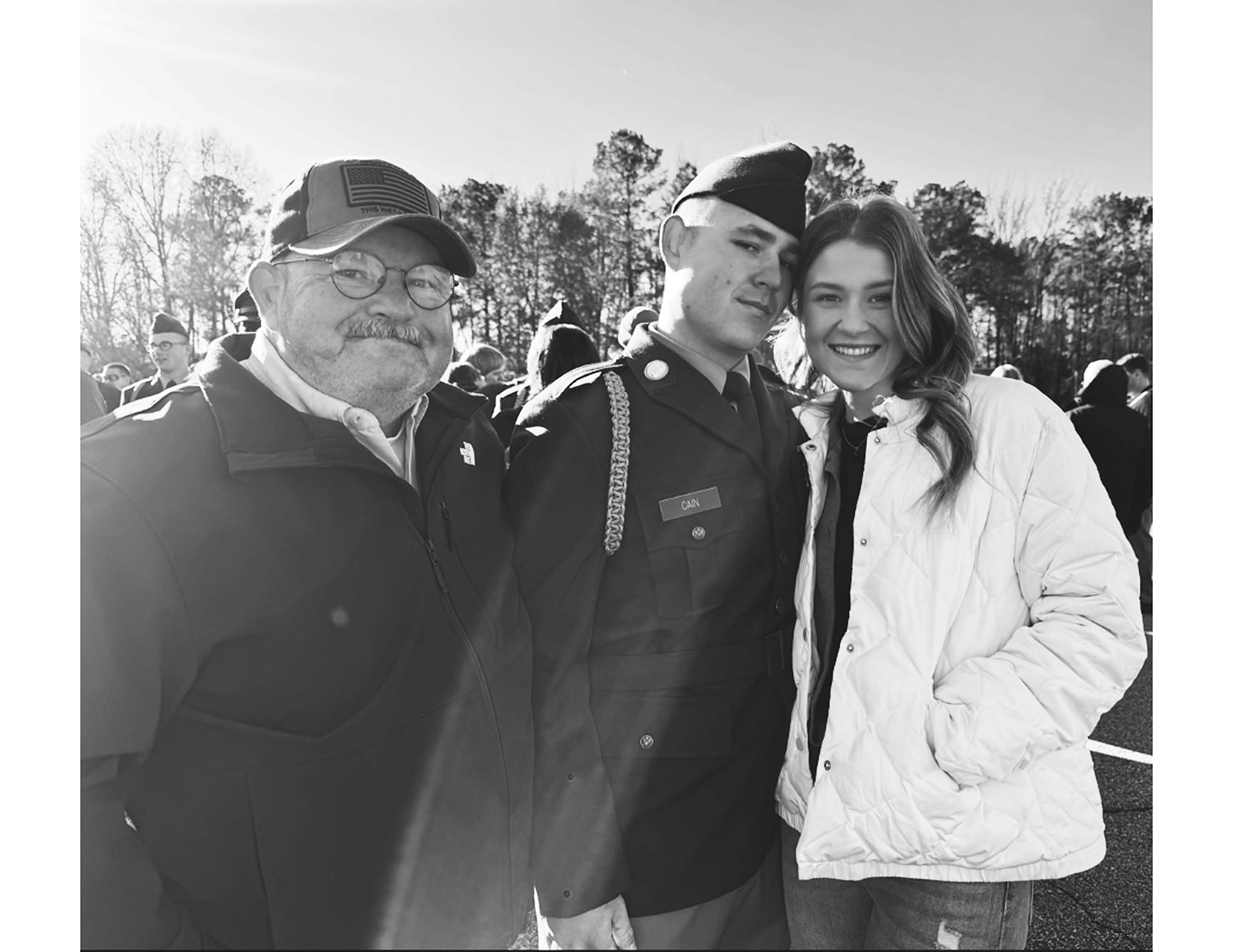
He is also beyond words proud. Cain’s daughter, Carli, followed her mother’s footsteps in the medical field as a nurse; his son, William, serves in the army.
“Last December, at the Army’s infantry training graduation ceremony, I watched the soldiers march onto the field, including my own son, and I said to myself, ‘We did it.’ With the success of my daughter as a nurse and now my son officially becoming a soldier, we were able to instill our beliefs and values into our kids. I know they’ll continue to be successful with their endeavors.”
Cain said his children’s successes have made him feel like he somehow succeeded as a parent. He eventually found love again, too.
And purpose.
And most importantly, the soldier found peace - the kind of peace that comes from serving others so that not all Hope is lost.