Louisiana Department of Wildlife and Fisheries plans to close its offices in Opelousas and New Iberia in April.
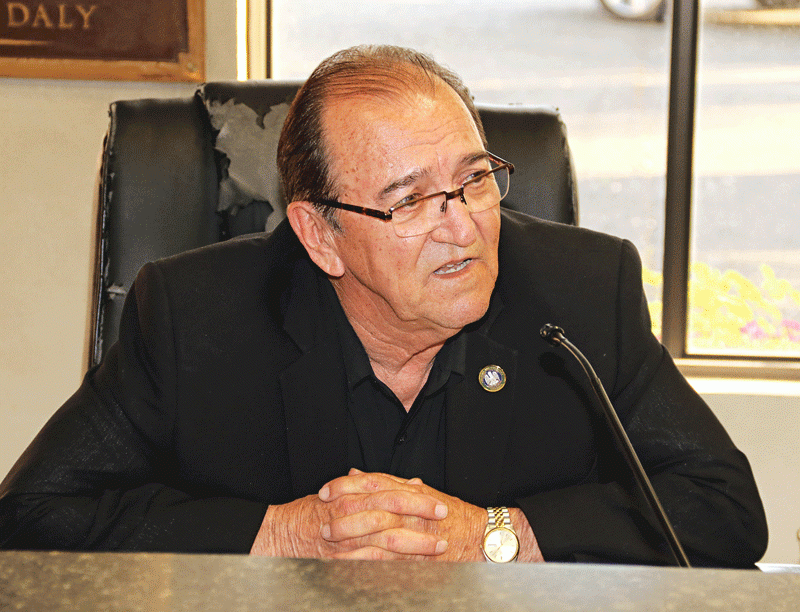
Jack Montoucet, secretary of Wildlife and Fisheries, announced the pending closures at the St. Landry Parish Council’s meeting on Wednesday.
The offices will be combined with operations in Lafayette at 200 Dulles Drive, off Bertrand Drive, which was recently purchased for $6.7 million, he said.
Montoucet said no employees will lose their jobs in the change.
The department has 22 employees in Opelousas, 43 in New Iberia and seven in Lafayette, Edward Pratt, department communications director said.
Montoucet, a former District 42 state representative, became secretary in January 2017, said Wildlife and Fisheries operates on funds it generates. About half of the department’s budget is funded by fees on hunting and fishing, and oil and gas revenues.
“We had about $50 million in capital outlay needs to build new buildings similar to the office we have here in St. Landry Parish. I can tell you the office was built in 1968 and it is in deplorable condition and to replace that office would be in the vicinity of $4 million...” he said.
The department’s office in New Iberia is in similar condition and the combined cost to replace them would be $12 million, he said.
Offices in Lake Charles and Monroe are also in need of replacement, he said
“The first thing the governor told me is ‘Jack, don’t come here for capital outlay. We don’t have any,’” he said.
A plan to save up to $5 million was arrived at in his first year in office and continues this year, Montoucet said.
“We started looking at the Opelousas office and the New Iberia offices first because those basically were the worst offices that we were faced with in the state,” he said.
“The big talk in Baton Rouge is consolidation. Cut, cut, cut. We are going to cut our way out of this,” he said of the state’s budget problems.
So, instead of building new offices in Opelousas and New Iberia at a cost of about $12 million, the decision was made to consolidate those offices in Lafayette for $6.7 million, he said.
The site also includes 5 acres for the department’s equipment, he said.
“The beauty of this building is we have enough office space we can lease to our federal partners — U.S. Fish and Wildlife and other agencies, USDA — we are able to lease office space to those people that will help us offset a huge portion of what the operating expenses of that building will be,” he said.
The Lafayette location will allow department personnel to be staged more effectively in emergencies, he said.
The new site also allows the department to sell a full range of licenses every day of the week, he said.
Montoucet said the department has proposed a revision of its license structure that would consolidate them from 117 to 30. The plan is to raise revenues, but in some cases license fees will decrease.