It ended up taking three special sessions, but the Legislature found enough ground to agree on a sales tax plan that will give the state stability going into the new fiscal year that begins on July 1.
The state faced the fiscal cliff that would have forced cuts many said would lead to“doomsday” scenarios for charity hospitals, nursing homes and TOPS, among other areas.
Law makers avoided that with a deal that brought an end to the third special session of 2018. That plan extended a temporary sales tax passed two years ago through 2025. The temporary 1-cent sales tax passed in ‘16 was set to expire on June 30. Last Sunday, law makers agreed to extend the temporary state sales tax, by having the rate go from 5 percent to 4.45 percent, beginning on July 1. That will generate an estimated $500 million and will help protect programs, such as TOPS and higher education funding, that are not included in the state’s $29 billion operating budget for the new fiscal year.
Sen. Jonathan Perry (R-Kaplan) ultimately did not agree with the final plan, voting no on extending the sales tax for seven years.
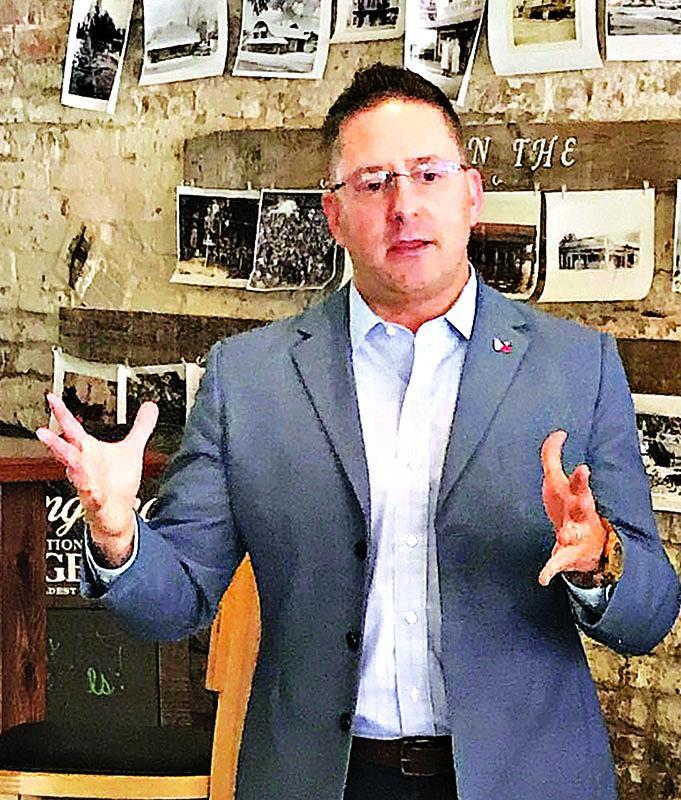
Perry spoke to the Kiwanis Club of Crowley, offering an explanation for his vote.
“Did we need additional revenue?,” Perry asked. “Yes, I don’t care what anyone tells you. The issue to me was how much. The bigger issue was for how long.
“I voted no because I didn’t want it for seven years.”
Perry set his limit for supporting any temporary tax at 36 months. The basis for that limit is that it would line up with the ‘21 regular session, which would be a fiscal session. This year’s was general session, which led to the need for the three special sessions.
“Every year it alternates from general session to fiscal session,” Perry said. “When you are in a general session, you cannot, by constitution, increase fees, revenue or anything of that nature. Thirty-six months would put us back in a fiscal (regular) session.
“We would not need a special session to reevaluate if we still need the (temporary sales tax).”
Perry also argued that in 36 months, the state’s economic landscape could change for the better. Particularly, the oil and gas industry, which had an effect on the state with its downturn, could be stronger. Perry said the state will also be able to see what revenue is created by the collection of sales tax from online purchases, something that the state can now collect.
“If oil comes back and brings revenue combined with online sales tax,” Perry said, “that might generate $1 billion. That is just something to look at.
“Pushing (the temporary sales tax) out seven years, I don’t think was the right thing for us to do.”