
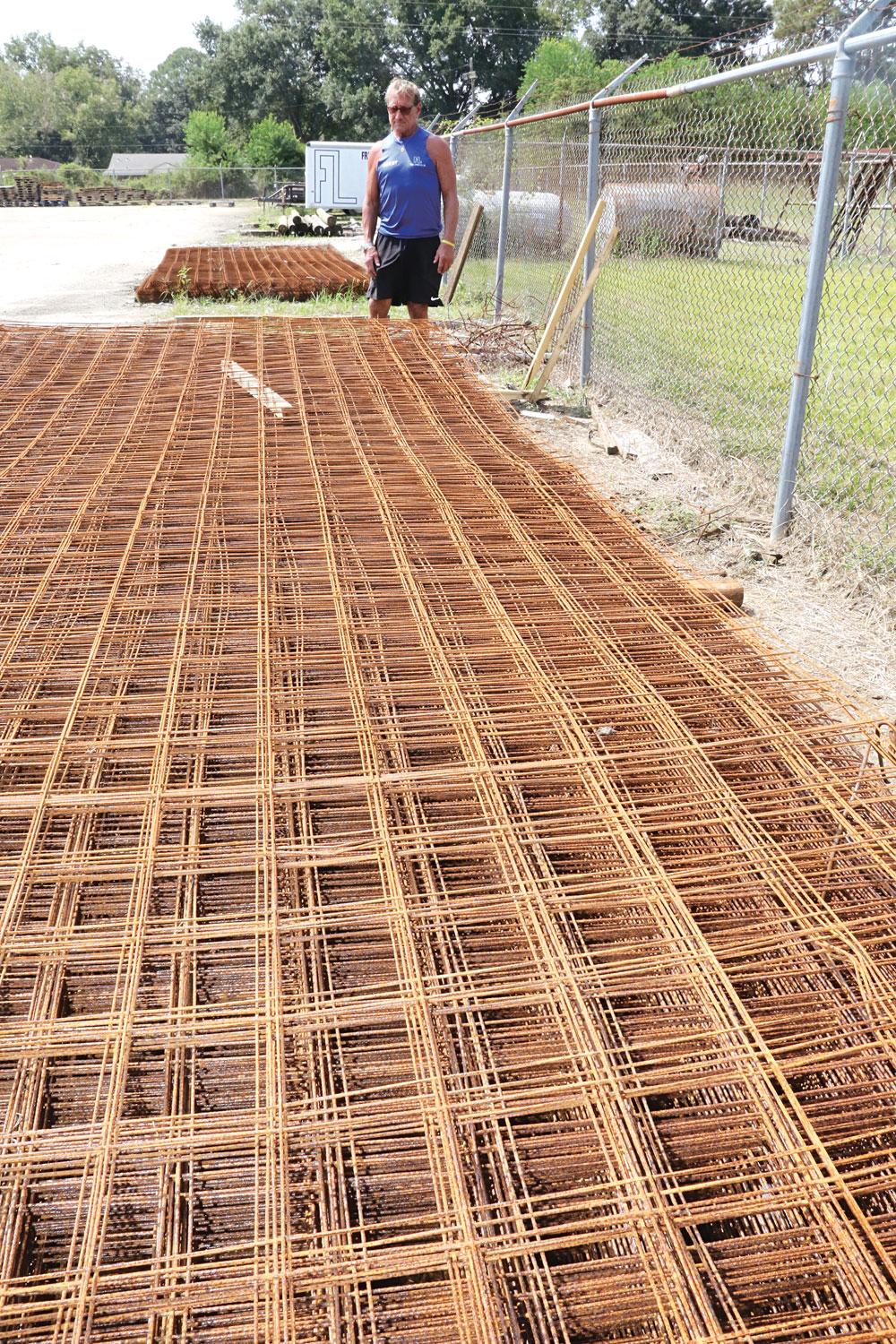
The tariffs imposed on international trade by President Donald Trump are raising some prices here.
Trump sells the tariffs as a tool to break what he sees as unfair international trade that has cost U.S. jobs.
Claudia Blanchard, director of operations for the St. Landry Parish School Board, estimated prices for school construction jobs have increased 12 to 15 percent.
Blanchard first mentioned the cost of tariffs impacting the school district when several roofing project bids came in higher than expected.
Newton “Chip” Thibodeaux, owner of Bayou State Homes on East Laurel Avenue, said metal product prices have risen with the tariffs and in some cases lumber costs have risen.
Framing packages have gone up about 10 percent, he said.
There has been a couple of price increases since the tariffs went into place this year.
Still, “I’m busier than I’ve been in years,” he said.
Rudy Fuselier, manager at Fruge Lumber on North 8th Street, said most of the lumber sales there involve pine grown in the U.S. The U.S. lumber is not subject to the tariff.
Spruce, which is grown in Canada and subject to a tariff, is not normally used here, he said.
Anything made of steel has increased in price probably by about 15 percent, he said.
Coby Clavier, manager at the Eunice Coburn’s Supply Company store on La. 13 north, said there has been a 10 to 20 percent increase in products made with steel and aluminum.
“This goes from steel conduit all the way down to individual receptacles for the wall. There is also another one in the works regarding LED chips and the components used to make LED fixtures/lamps. Those may be closer to the 20-25 percent range,” he stated in a message.
Clavier added, “Everything is speculation right now as none of these have been locked in yet, but we are expecting some serious impacts to pricing because of it. One small caveat is that on the conduit side, pricing of domestic conduit has gotten much more affordable (even though it did go up as well due to higher demand and shorter supply, but now in some cases is below the import items).”
Clavier said, “The domestic manufacturers are claiming some better numbers and seeing gains in revenue, which overall is good for our country.”
The U.S. tariffs have been met with retaliatory tariffs.
After China slapped a tariff on U.S. farm products, Trump said he would compensate farmers with $12 billion in aid.
Other industries have followed in seeking compensation.
The U.S. Chamber of Commerce has estimated the total price to compensate U.S. industries from tariffs would be $39 billion, according to a Washington Post story.
Trump placed a 25 percent tariff on steel and 10 percent tariff on aluminum.
Tariffs felt here
Business reported to be brisk despite price increases