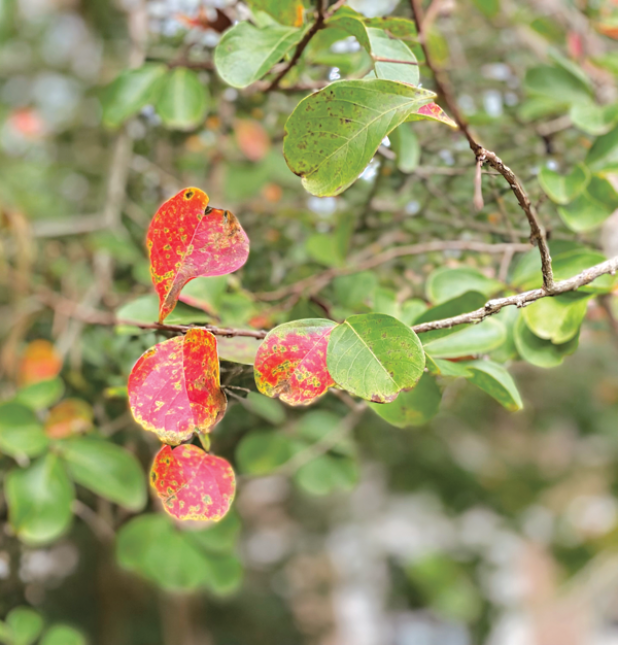
Leaves turn yellow, orange and red, then fall from the tree as if it were autumn. (Photos by Heather Kirk-Ballard/LSU AgCenter)
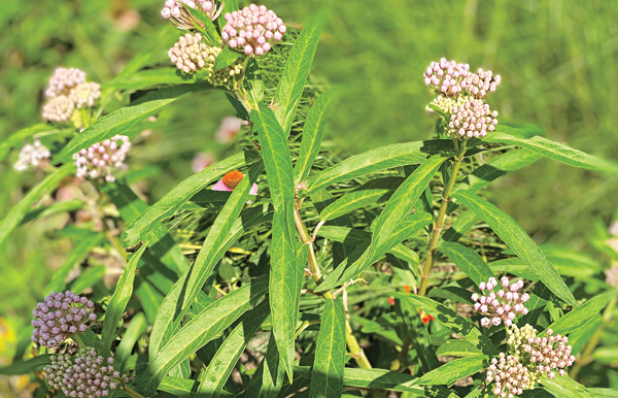
Swamp milkweed (A. incarnata) is an excellent native milkweed for monarch butterflies. (Photos by Heather Kirk-Ballard/LSU AgCenter)
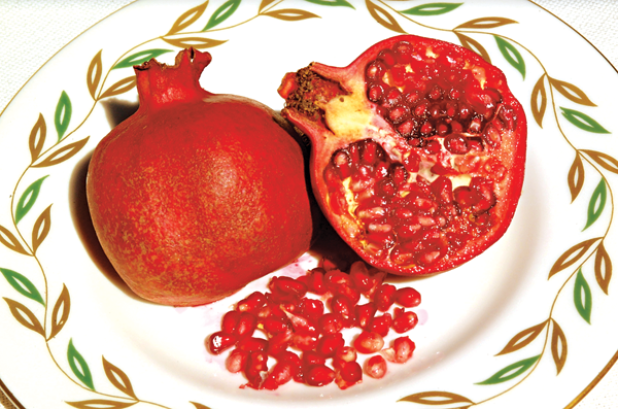
Pomegranates produce hundreds of seeds encased in an edible membrane that produces a delicious juice. (LSU AgCenter file photo)
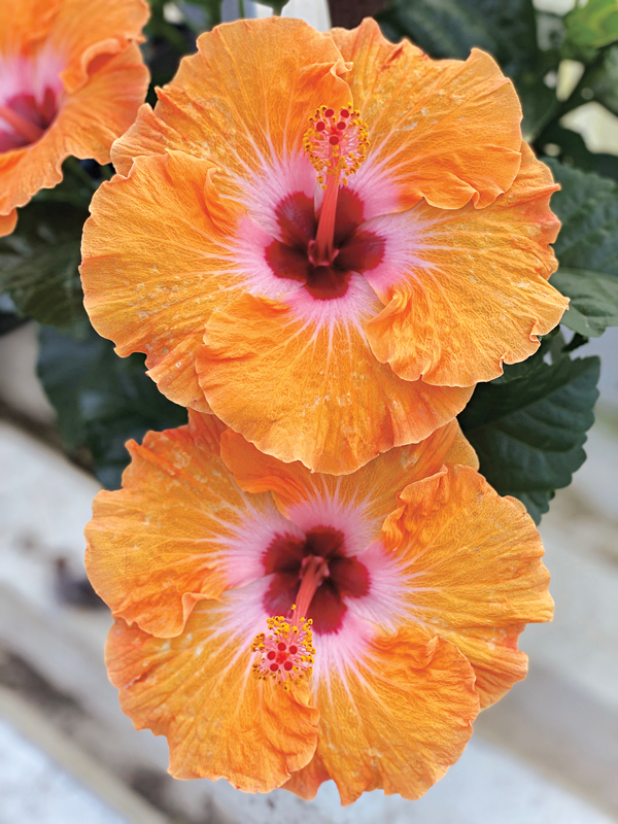
Tropical hibiscus comes in single- and double-flower forms in nearly any color combination imaginable.
LSU AgCenter rice specialist Ronnie Levy describes the latest studies in the rice agronomy project during the 113th annual Rice Field Day at the H. Rouse Caffey Rice Research Station held recently at the Crowley facility. (Photo by Olivia McClure/LSU AgCenter)
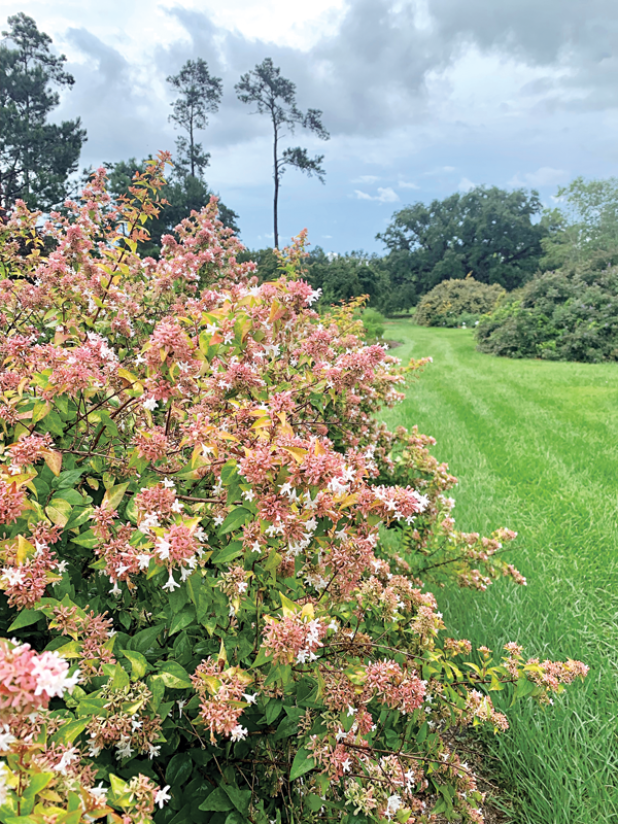
Peach Perfection has beautiful peach-pink flower clusters that are abundant in summer through fall. (Photo by Max McKeown/LSU AgCenter)
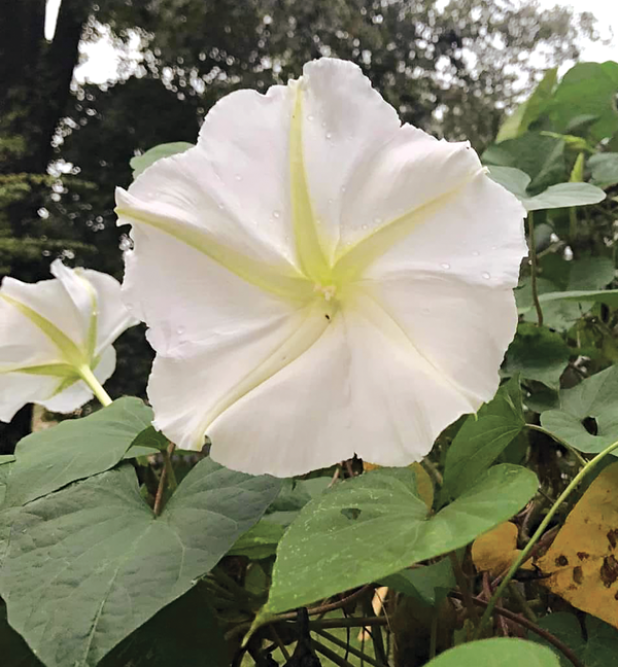
By Heather Kirk-Ballard LSU AgCenter horticulturist This week’s full moon drew many people out to sit in awe of the bright, beautiful moon. It reminded me of moon gardening. Someone asked me about moon gardening in the past, and I wasn’t sure of what it was. Curious, I did some digging into the subject. Here is what I discovered. Moon gardens are enjoyed at night and defined by the type of plants they include — typically, plants with white or cool-colored flowers in addition to silver or variegated foliag