Agriculture

Fertilize soil not the plant

Fertilizers improve soil health so that the essential nutrients are available for a plant to soak up through its roots. All plants need rich fertile soil to grow their best and stay healthy. Adding nutrients already plentiful in the soil may cause more harm than good for the plant.
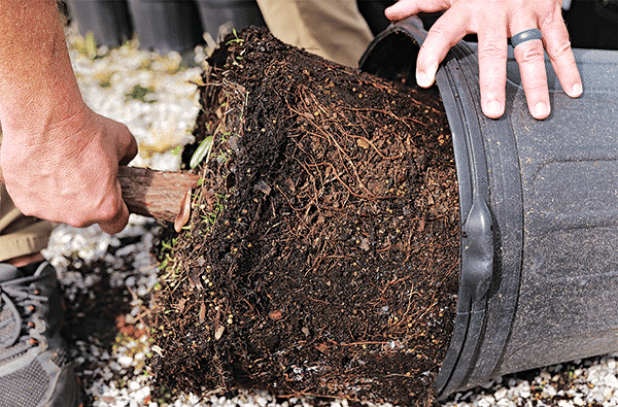
To get a look at a tree’s roots before purchasing, gently slip it out of its container. (Photo by Randy LaBauve/LSU AgCenter)

To get a look at a tree’s roots before purchasing, gently slip it out of its container. (Photo by Randy LaBauve/LSU AgCenter)

It’s a good time to plant a tree. Here’s how to decide on one that’s right for you.

If you’ve been thinking about adding a tree to your yard, now is the time to do it. And if you haven’t given it much thought, now is a perfect opportunity to consider planting a tree. Trees, in short, are great.
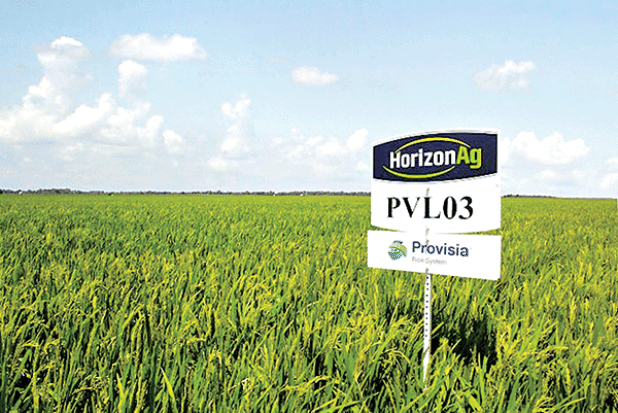
PVL03, a widely grown rice variety developed by the LSU AgCenter, was recently found to have a low glycemic index. (Photo provided by Horizon Ag)

PVL03, a widely grown rice variety developed by the LSU AgCenter, was recently found to have a low glycemic index. (Photo provided by Horizon Ag)

Louisiana’s most widely grown rice variety has low glycemic index

People in Louisiana love to eat rice. So when an LSU AgCenter-developed rice variety offering a low glycemic index and a boost in protein hit store shelves a couple of years ago, customers took notice.
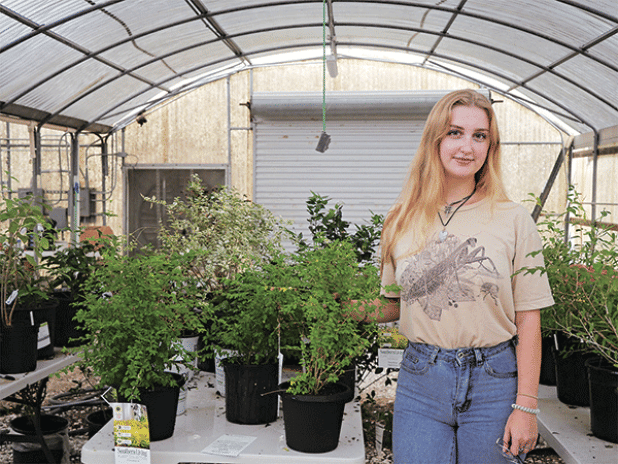
LSU graduate student Brandi Misiaszek standing around different privets and ornamentals that she has used to study the habits of the ligustrum weevil at a greenhouse at the LSU AgCenter Doyle Chambers Central Research Station. Photo by Anthony Bailey/LSU AgCenter

LSU graduate student Brandi Misiaszek standing around different privets and ornamentals that she has used to study the habits of the ligustrum weevil at a greenhouse at the LSU AgCenter Doyle Chambers Central Research Station. Photo by Anthony Bailey/LSU AgCenter

Weevil may be the solution to an invasive species

Throughout the southeastern United States, an invasive species, Chinese privet, has been entering and taking over land at an exceptional rate. The shrub produces thousands of small, green and purple fruits that are eaten by animals and spread with notable efficiency.
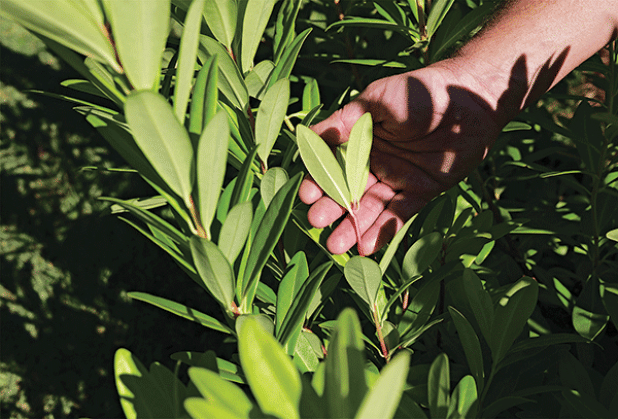
The leaves of Florida Sunshine anise emit a licorice-like scent when handled. The fragrance is pleasant to people and helps repel deer. (Photo by Randy LaBauve/LSU AgCenter)

The leaves of Florida Sunshine anise emit a licorice-like scent when handled. The fragrance is pleasant to people and helps repel deer. (Photo by Randy LaBauve/LSU AgCenter)

Florida Sunshine anise brightens shady spots with cheery chartreuse foliage

Each year, the LSU AgCenter names at least four plants to be included in the ever-growing list of Louisiana Super Plant selections. Super Plants are tried and true, tested and tough. They’ve proven themselves to be successful in all parts of the state.
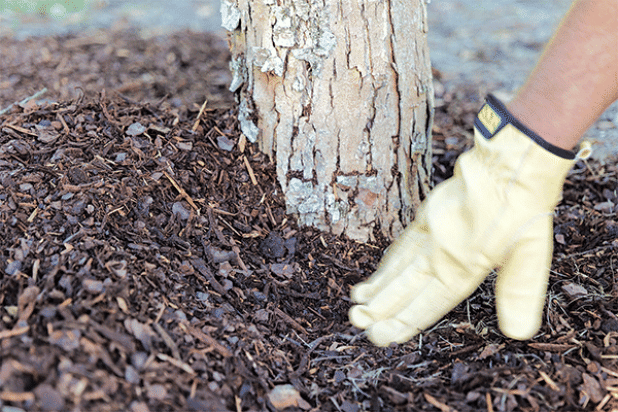
Take care to keep mulch from touching the base of the tree trunk. (Photo by Randy LaBauve/LSU AgCenter)

Take care to keep mulch from touching the base of the tree trunk. (Photo by Randy LaBauve/LSU AgCenter)

‘Mulch’ ado about nothing? Actually, it’s pretty important

If you use mulch in your landscape, chances are it has thinned out over the summer and is in need of refreshing. If you’ve been putting off this chore, consider this: Mulching isn’t just about aesthetics.
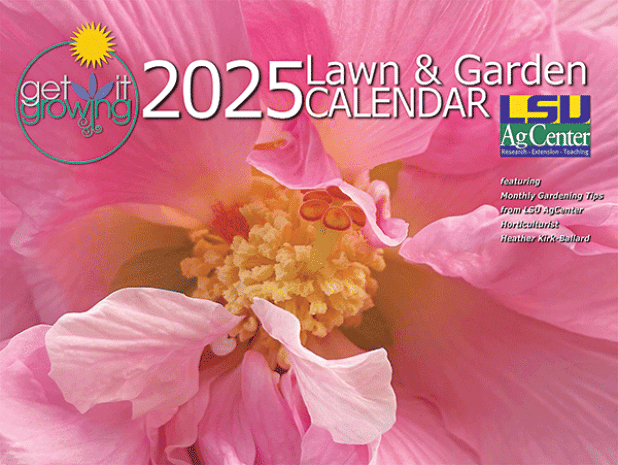
The delicate pink Confederate rose flower (Hibiscus mutabilis) is captivating with its soft, enchanting hues and large, showy blooms. (Photo by Glenda Balliviero.)

The delicate pink Confederate rose flower (Hibiscus mutabilis) is captivating with its soft, enchanting hues and large, showy blooms. (Photo by Glenda Balliviero.)

Get It Growing Calendars return for 2025

The LSU AgCenter is once again releasing a Get It Growing calendar for 2025, giving gardeners and plant lovers a new horticulture resource with tips on gardening and sublime pictures.
A bee collects pollen from a flower on a Mexican bush sage plant. (Photo by Randy LaBauve/LSU AgCenter)

A bee collects pollen from a flower on a Mexican bush sage plant. (Photo by Randy LaBauve/LSU AgCenter)

Savor the salvias before they’re gone

Early fall is when we say goodbye to most of the migratory hummingbirds that have been visiting our gardens since mid-summer. Even after they’ve left us to fly south for the winter, we can continue to savor the beauty of some of the flowers that fed them.
Woody vines cover a tree. (Photo by Randy LaBauve/LSU AgCenter)

Woody vines cover a tree. (Photo by Randy LaBauve/LSU AgCenter)

Claim victory over vines

As we transition into fall, many of us have been busy catching up on chores in the garden that went by the wayside during the summer — things like weeding flowerbeds and pulling up and replacing plants that succumbed to the heat. Here’s another task to add to your list: removing vines.
Vibrant marigolds, zinnias and crotons offer a way to refresh the late-summer garden as we prepare to transition into fall. (Photo by Randy LaBauve/LSU AgCenter)

Vibrant marigolds, zinnias and crotons offer a way to refresh the late-summer garden as we prepare to transition into fall. (Photo by Randy LaBauve/LSU AgCenter)

Refresh the late-summer garden with fall colors

We’re almost to the finish line: The long, hot summer will be over soon, and fall will officially arrive later this month. You may be itching to replace those warm-season landscape plants that have gone crispy in the summer sun.