Agriculture

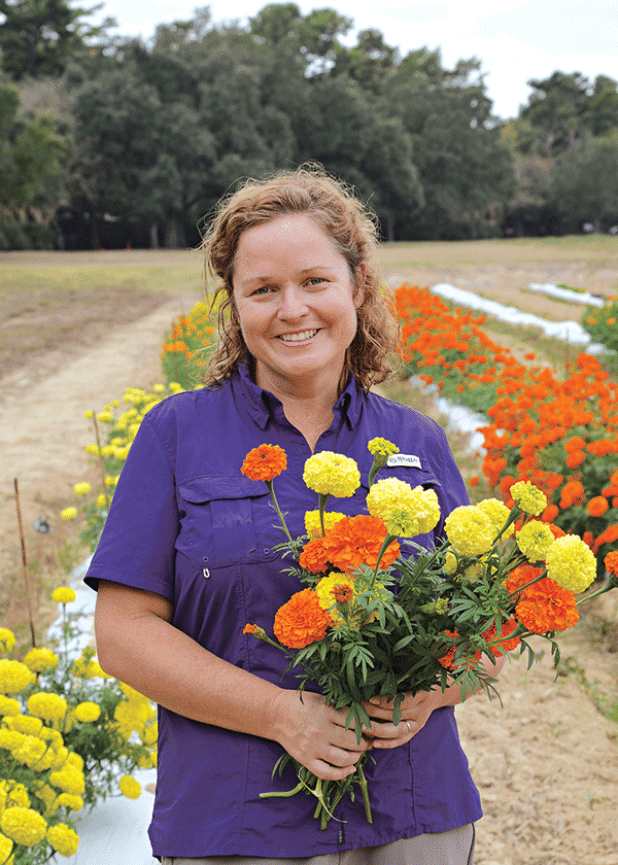
A great way to minimize your inputs while maximizing your outputs is to use plants athat are edible. (Photo by Heather Kirk-Ballard/LSU AgCenter)

A great way to minimize your inputs while maximizing your outputs is to use plants athat are edible. (Photo by Heather Kirk-Ballard/LSU AgCenter)

It’s a new year in the garden and time to plan

With a new year upon us, now is the time to sit down and reflect on last year and what you would like to do with your garden and landscape in 2024. There are some consistent gardening trends across the U.S.
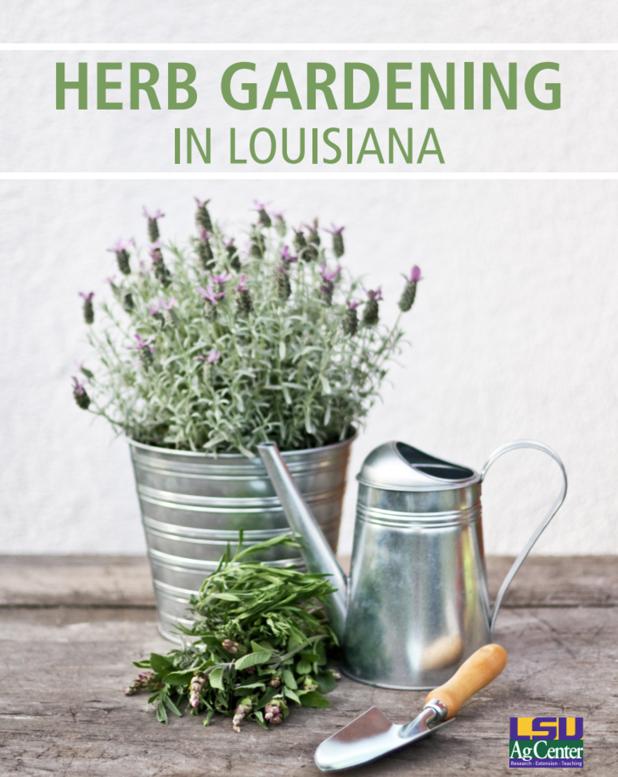
Grow herbs year-round in Louisiana. (LSU AgCenter file)photo)

Grow herbs year-round in Louisiana. (LSU AgCenter file)photo)

Flavorful herb harvestg

Nothing elevates a delicious recipe quite like the burst of flavor from fresh herbs plucked straight from your garden. Ever found yourself searching for a specific herb in the grocery store, only to be disappointed by the quality? Homegrown herbs to the rescue!

2024 gardening resolutions

Find five resolutions in this list of ideas to accomplish during the coming year. Happy 2024 gardening! Hang or build a bird feeder. Start a compost bin. Ask your grandparents what they grew in their gardens. Weave native plants into your flower beds.
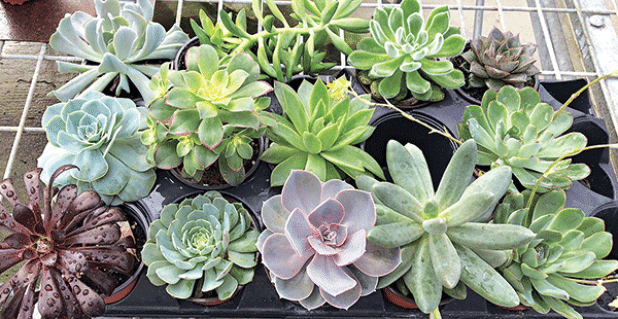
Choose drought-tolerant plants. (Photo by Heather Kirk-Ballard/LSU AgCenter)

Choose drought-tolerant plants. (Photo by Heather Kirk-Ballard/LSU AgCenter)

From drought to frost: A gardener’s guide for changing climates

As we approach the year’s end, take a moment to think about the past gardening season. Louisiana gardeners experienced challenges from late spring freezes to a severe summer drought and scorching heat.
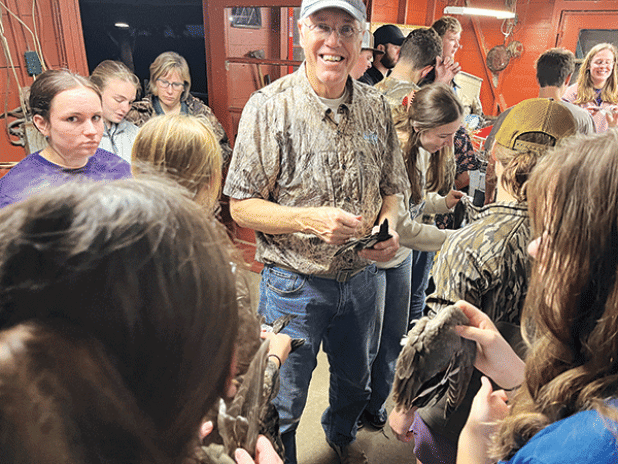
Mark Shirley, a coastal specialist with the LSU AgCenter and Louisiana Sea Grant, smiles while showing wings of various duck species to 4-H members participating in an Advanced Marsh Maneuvers camp in December. Photo by Hilton Waits/LSU AgCenter

Mark Shirley, a coastal specialist with the LSU AgCenter and Louisiana Sea Grant, smiles while showing wings of various duck species to 4-H members participating in an Advanced Marsh Maneuvers camp in December. Photo by Hilton Waits/LSU AgCenter

3 decades later, Mark Shirley still finds joy in teaching 4-H’ers about La. marshes

By Olivia McClure omcclure@agcenter.lsu.edu GUEYDAN — In the late 1980s, a group of 4-H Junior Leaders in Vermilion Parish was itching to do something fun for a summer club activity.
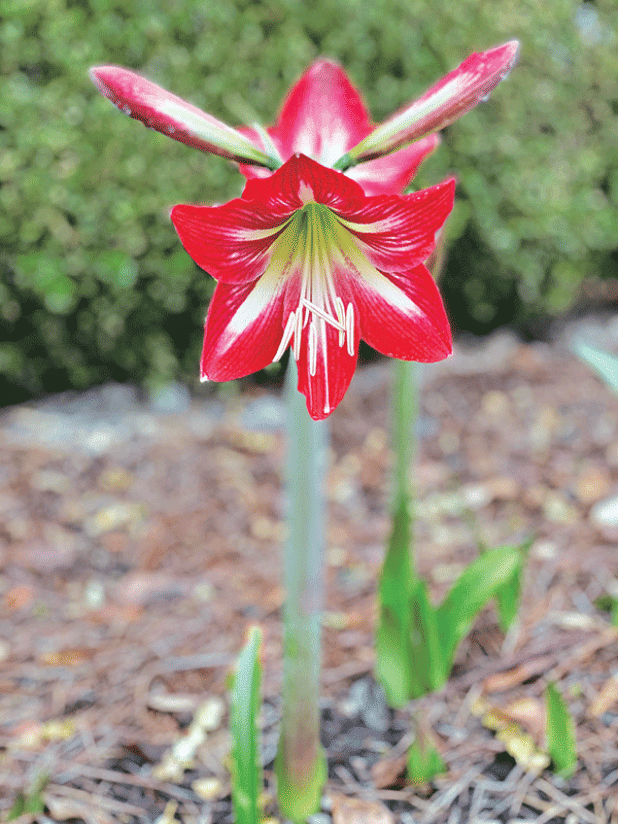
Numerous amaryllis varieties return and blossom in the summer garden consistently. (Photo by Heather Kirk-Ballard/LSU AgCenter )

Numerous amaryllis varieties return and blossom in the summer garden consistently. (Photo by Heather Kirk-Ballard/LSU AgCenter )

Amaryllis present stunning blooms

Each year, the National Garden Bureau designates a specific plant to celebrate each year. The goal is to promote awareness, education and appreciation for that particular plant — and this year, one of the selections is amaryllis.
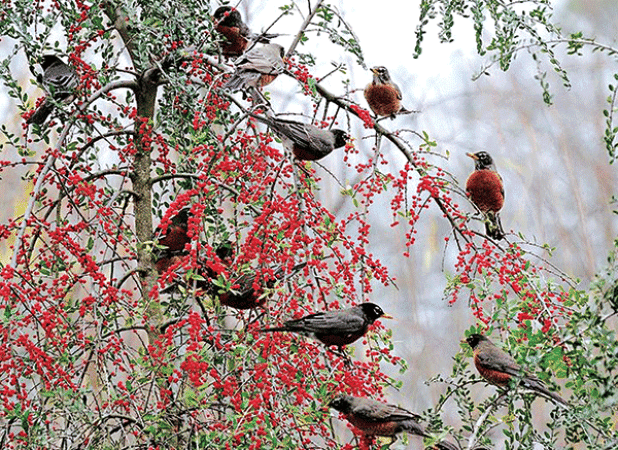
Keep wildlife and ecosystem services in mind when selecting plants. (Photo provided by Norman Winter)

Keep wildlife and ecosystem services in mind when selecting plants. (Photo provided by Norman Winter)

Cool season planting guide

December — and winter in general — in Louisiana is a fine time to plant in the landscape. Now is the time to add trees, shrubs and cool-season annual and perennial bedding plants. The key is to know what to plant, where to plant and what the intended use of the space is.
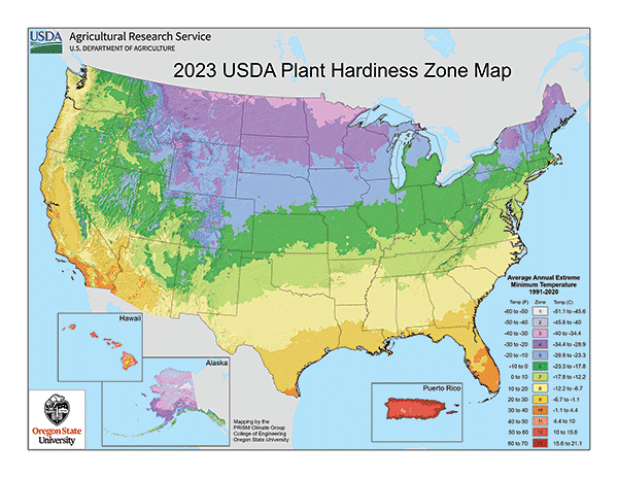
By Heather  Kirk-Ballard  LSU AgCenter  horticulturist  In November, the U.S. Department of Agriculture released its latest version of the Hardiness Zone Map. This mapping system categorizes geographic regions according to their average annual minimum winter temperatures. The map helps by assisting gardeners, horticulturists and landscaping experts in choosing plants suited to specific climates.   The USDA Hardiness Zone Map has a history dating back several decades, and it has undergone multiple revisions

By Heather Kirk-Ballard LSU AgCenter horticulturist In November, the U.S. Department of Agriculture released its latest version of the Hardiness Zone Map. This mapping system categorizes geographic regions according to their average annual minimum winter temperatures. The map helps by assisting gardeners, horticulturists and landscaping experts in choosing plants suited to specific climates. The USDA Hardiness Zone Map has a history dating back several decades, and it has undergone multiple revisions

Climate check: The updated USDA Hardiness Zone Map

In November, the U.S. Department of Agriculture released its latest version of the Hardiness Zone Map. This mapping system categorizes geographic regions according to their average annual minimum winter temperatures.
Kathryn “Kiki” Fontenot will assume the role of director of the LSU AgCenter Southwest Region in January. Among other new programs, she plans to test a pilot program for a floral design course. (Photo by Kyle Peveto/LSU AgCenter)

Kathryn “Kiki” Fontenot will assume the role of director of the LSU AgCenter Southwest Region in January. Among other new programs, she plans to test a pilot program for a floral design course. (Photo by Kyle Peveto/LSU AgCenter)

AgCenter horticulturist Kathryn Fontenot named next Southwest Region director

Kathryn “Kiki” Fontenot, an LSU AgCenter horticulturist who has educated students and Louisiana vegetable growers for more than a decade, will become director of the AgCenter Southwest Region in January.
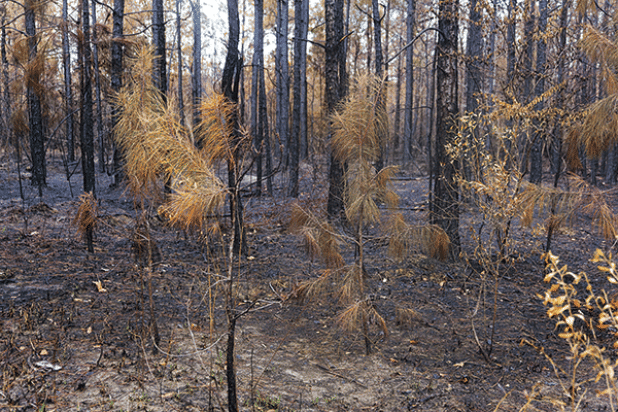
Young pine trees sport dead, brown needles and charred bark in a forest along Lonzie Doyle Road near the Westport community in Rapides Parish on Sept. 5, 2023. This forest burned in the Highway 113 Fire, which damaged about 8,000 acres. (Photo by Olivia McClure/LSU AgCenter)

Young pine trees sport dead, brown needles and charred bark in a forest along Lonzie Doyle Road near the Westport community in Rapides Parish on Sept. 5, 2023. This forest burned in the Highway 113 Fire, which damaged about 8,000 acres. (Photo by Olivia McClure/LSU AgCenter)

Drought, excessive heat cost $1.69B to La. Ag, forestry

Louisiana agriculture and forestry suffered $1.69 billion in damage due to this summer’s drought and excessive heat, according to preliminary estimates by LSU AgCenter experts.